
Surgical Oncology - Anastomosis Staplers or Reloads Equipment Suppliers
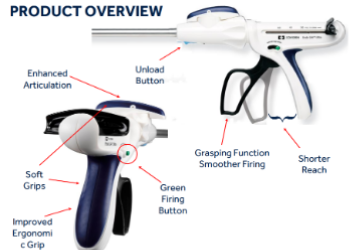
ENDO GIA ULTRA UNIVERSAL STAPLERS
Provides intuitive, precise access to surgical sites and flexibility to approach target tissue/vessel through 10 positions of articulation (5 on each side) Articulates up to 45 degrees on each side Articulation knob and reload move in same direction
View DetailsAbout Surgical Oncology - Anastomosis Staplers or Reloads Equipment Suppliers
Cancer surgery often involves removing the affected part of the body. After this part is removed, the healthy parts may need to be joined together again. This is especially common in surgeries involving the stomach, small intestine, colon, or rectum.
In some of these procedures, surgeons use surgical oncology anastomosis staplers to join two sections of tissue. These devices use surgical staples to help create a connection between the tissues.
Anastomosis staplers for cancer surgery can help make certain parts of a surgical procedure more controlled and efficient. In some systems, the right stapler reload is also needed for the procedure.
At Medikasurgi, we provide surgical products designed to support healthcare professionals with solutions for different surgical needs.
What Are Surgical Oncology Anastomosis Staplers?
Surgical oncology anastomosis staplers are surgical devices used in some cancer surgeries to join two sections of tissue after a diseased or damaged part has been removed.
The process of joining two parts of the body is called an anastomosis.
For example, during some intestinal cancer surgeries, a surgeon may remove the affected part of the intestine. The healthy sections that remain may then need to be joined together. An anastomosis stapler can help the surgeon create this connection with surgical staples.
These devices are used by trained surgeons in hospitals and surgical centres. The type of stapler selected depends on the procedure, the location of the tissue, tissue thickness, and the surgeon's preferred technique.
Why Are Anastomosis Staplers Used in Cancer Surgery?
Cancer surgery may require the removal of part of an organ or tissue. Once the affected area is removed, the remaining healthy sections may need to be connected.
Oncology anastomosis staplers can help surgeons create a planned and consistent staple line during this process.
Some possible advantages include:
- Helps join two sections of tissue
- Supports a controlled stapling process
- Can make some surgical steps more efficient
- Available in different sizes and designs
- Can be used for different surgical applications
- May work with compatible reloads, depending on the stapling system
The choice of device always depends on the patient's condition, the procedure, and the surgeon's clinical judgment.
Anastomosis Staplers for Cancer Surgery
Different cancer surgeries require different surgical instruments. In gastrointestinal cancer surgery, an anastomosis may be needed after a diseased section has been removed.
Anastomosis staplers may be considered for procedures involving areas such as:
- Colon
- Rectum
- Small intestine
- Stomach
- Other parts of the digestive system
Before choosing a stapler, the surgical team looks at the procedure and the condition of the tissue.
Anastomosis staplers for cancer surgery are designed to help join sections of tissue during suitable procedures. The correct device can help the surgical team follow the planned surgical technique.
How to Choose the Right Anastomosis Stapler
There is no single stapler that is right for every procedure. The appropriate device depends on the specific surgical requirements.
Healthcare professionals may consider:
- Type of cancer surgery
- Location of the surgical site
- Thickness of the tissue
- Required staple size
- Type of anastomosis
- Surgical approach
- Compatible reloads
- Surgeon experience and preference
Healthcare professionals should always check the manufacturer's instructions and make sure the stapler and reload are compatible before use.
What Are Anastomosis Stapler Reloads?
Some stapling systems use separate reloads. A reload contains the surgical staples needed for a particular stapling application.
Anastomosis stapler reloads are designed to work with specific compatible stapling systems. The correct reload should be selected according to the stapler, tissue thickness, and requirements of the procedure.
Different tissues may have different thicknesses. Because of this, choosing the appropriate reload is an important part of preparing for the procedure.
Why Are Oncology Stapler Reloads Important?
During cancer surgery, surgeons need instruments that match the planned procedure. Oncology stapler reloads provide the staples needed for compatible stapling systems.
When selecting a reload, healthcare professionals should check:
- Whether it is compatible with the stapler
- Tissue thickness
- Staple size and specifications
- Intended surgical use
- Manufacturer instructions
- Requirements of the procedure
The surgical team should always use the product according to the manufacturer's instructions.
Surgical Oncology Staplers in Modern Cancer Surgery
Modern cancer surgery aims to remove affected tissue while preserving healthy tissue whenever clinically appropriate. After removing the affected area, the surgeon may need to reconnect the remaining tissues.
Surgical oncology staplers can be one of the tools used during these procedures.
They can be useful when two sections of tissue need to be joined. The stapler helps create a planned staple line as part of the surgical procedure.
However, a stapler is only one part of the overall surgery. The patient's condition, tissue quality, surgical technique, and other clinical factors can all affect the procedure and its outcome.
Important Things to Consider Before Choosing a Stapler
Hospitals and healthcare professionals should carefully consider their needs before selecting an anastomosis stapling system.
1. Type of Procedure
The stapler should be suitable for the planned surgical procedure and intended application.
2. Tissue Thickness
Tissues can vary in thickness. The stapler and reload should be appropriate for the tissue and intended use.
3. Stapler and Reload Compatibility
If the stapling system uses separate reloads, the reload must be compatible with the specific stapler.
4. Product Quality
Healthcare professionals should choose surgical products from reliable medical device suppliers and follow applicable quality and safety requirements.
5. Ease of Use
A suitable device should fit into the surgical workflow and support controlled handling during the procedure.
Why Choose medikasurgi for Surgical Products?
Medikasurgi provides medical and surgical products for healthcare professionals.
Healthcare professionals looking for oncology anastomosis staplers, stapler reloads, and other surgical products should select products based on their specific procedure and clinical requirements.
At Medikasurgi, we aim to provide clear product information so healthcare professionals can better understand and explore suitable surgical solutions.
Frequently Asked Questions
1.What are surgical oncology anastomosis staplers?
Surgical oncology anastomosis staplers are devices used during some cancer surgeries to join two sections of tissue. They may be used when healthy tissue needs to be connected after a diseased section has been removed.
2.Where are anastomosis staplers used?
Anastomosis staplers may be used in certain procedures involving the stomach, small intestine, colon, rectum, and other parts of the digestive system. Their use depends on the specific procedure and the surgeon's decision.
3.What are anastomosis stapler reloads?
Anastomosis stapler reloads contain surgical staples for use with compatible stapling systems. The correct reload depends on the stapler, tissue thickness, and intended surgical application.
4.How are oncology stapler reloads selected?
Healthcare professionals may consider the tissue thickness, stapler compatibility, staple specifications, and requirements of the procedure when selecting a reload. Manufacturer instructions should always be followed.
5.Are anastomosis staplers used for every cancer surgery?
No. Not every cancer surgery requires an anastomosis stapler. The need for one depends on the type of surgery, the tissue involved, and the surgeon's chosen technique.
6.Why is stapler compatibility important?
Staplers and reloads are designed to work with specific systems. Using compatible products helps ensure that the devices are intended to work together. Healthcare professionals should always check the manufacturer's product information before use.
7.Who can use surgical oncology staplers?
These devices are intended for trained healthcare professionals. Their use should be based on appropriate training, clinical judgment, and the manufacturer's instructions.
Conclusion
Surgical oncology anastomosis staplers can be useful in certain cancer surgeries where healthy sections of tissue need to be joined after part of the tissue has been removed.
The right stapler and compatible anastomosis stapler reloads can support a controlled and efficient surgical process.
Choosing the right product depends on several factors, including the type of procedure, tissue thickness, stapler compatibility, and the surgeon's requirements.
Healthcare professionals should always follow the manufacturer's instructions and applicable clinical guidelines when using surgical devices.
Medikasurgi provides surgical products and solutions for healthcare professionals across different surgical applications.
Explore Surgical Solutions with Medikasurgi
Looking for surgical oncology staplers, oncology anastomosis staplers, or anastomosis stapler reloads?
Explore the surgical product solutions available from medikasurgi and contact the team to discuss your specific requirements.